This month's blog explores the sensitive subject of suicide rates in the construction industry.
700 construction workers take their own lives every year in the UK.
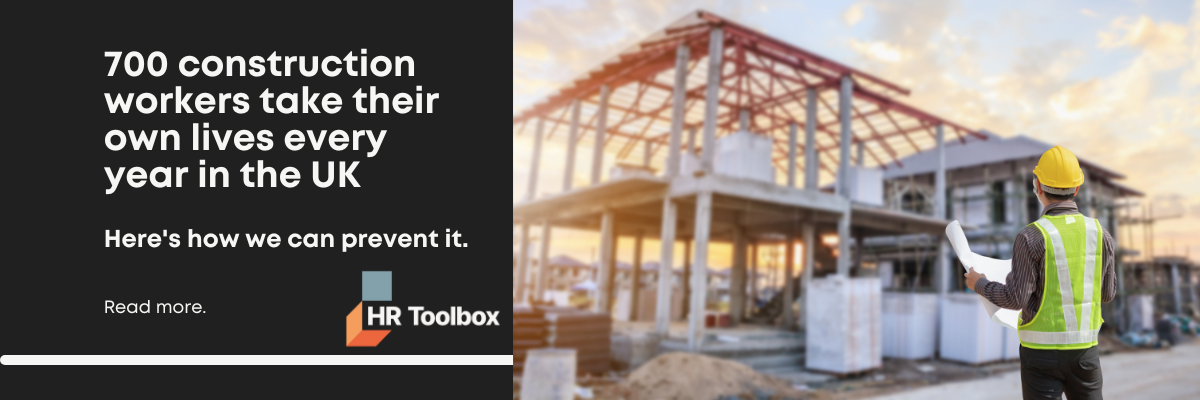
That’s a minimum of two lives lost, every single day, which is a really scary and awful statistic.
What a grim reality to remind us of the profound impact of mental health challenges within the construction industry.
Some unique factors might be contributing to high suicide levels in construction, including:
Male-dominated industry: Exacerbated by outdated beliefs that “men should be tough” and that showing any kind of vulnerability is somehow “weak” or “unmanly”, male-dominated industries are shrouded in stigma around openly talking about mental health, stress and similar challenges.
Physical demands and high-risk environments: This industry is inherently stressful, and the demanding physical expectations can further contribute to physical and mental health challenges.
Long working hours: Extended working hours compromises work-life balance and can mean not getting enough rest, which also increases the health and safety risks.
Job insecurity and financial instability: Seasonal fluctuations and market instability create personal financial instability, adding pressure to personal life.
So, as business leaders, what can we do to take positive steps to reduce stress at work and destigmatise mental health challenges?
Here are 3 areas to focus our efforts on:
Raise awareness and educate:
Increasing awareness and educating staff about mental health challenges and the signs of burnout are crucial for dismantling the stigma and encouraging employees to seek help early.
Regular check-ins:
Establishing a system of monthly check-ins between managers and their team members is great for improving employee engagement. Asking some wellbeing-related questions during these meetings creates opportunities to provide support.
Promote work-life balance:
We shouldn’t need legislation to force companies to promote a better work-life balance or offer more flexibility for their people. Limiting excessive overtime and promoting a healthy work-life balance are essential for reducing stress in any industry - not just construction.
Providing employees with access to wellness resources such as an Employee Assistance Programme (EAP) is not always financially affordable for small businesses.
Fortunately, there are many charities and free resources available in the UK.
● Mind: Mind offers a range of resources, including information on mental health conditions, tips for well-being and access to their Infoline for support.
●
Samaritans: A helpline available 24/7, Samaritans provide confidential emotional support for anyone struggling to cope.
●
CALM (Campaign Against Living Miserably): Focused on preventing male suicide, CALM provides support through a helpline and webchat.
●
Headspace: An app offering guided meditation and mindfulness exercises, Headspace can be a helpful tool for stress reduction.
●
Woebot:
A free app offering assistance with stress, anxiety, sleeplessness and depression, using proven Cognitive Behavioural Therapy (CBT) techniques.
● My Sante App: A budget friendly health and wellbeing app that offers a variety of personal support services to aid with life’s challenges, including 24/7 Digital GP, Counselling Helpline and much more; be sure to quote "HR Toolbox" when you contact them;
Let’s work together to enhance well-being within your workplace. Together, we can break the silence surrounding mental health and help prevent suicide.
Get In Touch